
5 Simple Moves to Improve Balance After 50
I have been working with adults over 50 for almost 20 years, and there really is no other way to say it: practice regularly what you want to improve.
Many people use age as an excuse. Does our balance worsen with age? Yes. Is there nothing we can do about it? Hell no!
There is no magic pill that will improve your balance—other than practice. I have worked with people who have neurological conditions and those who do not, and my prescription is always the same: do it every day and make it part of your routine.
The good news? You don't need to set aside extra time. There are countless ways to integrate balance training into your daily life. Brush your teeth on one foot. Practice a single-leg stand while making your coffee. Walk an "imaginary" tightrope through the kitchen. Do Tree Pose while talking to a friend. In fact, it's even better when you're practicing balance while doing something else.
Life throws us curveballs. We get distracted while talking and trip on a curb. We jump out of a cab and suddenly a bike is speeding down the bike lane. A grandchild runs over and wraps themselves around our legs. A loud noise startles us. These are all situations that can throw us off balance.
When we practice balancing while multitasking—talking, singing, moving our heads, or reaching with our arms—we train our proprioceptors (the sensors that tell our brain where we are in space) to react more effectively when life catches us off guard.
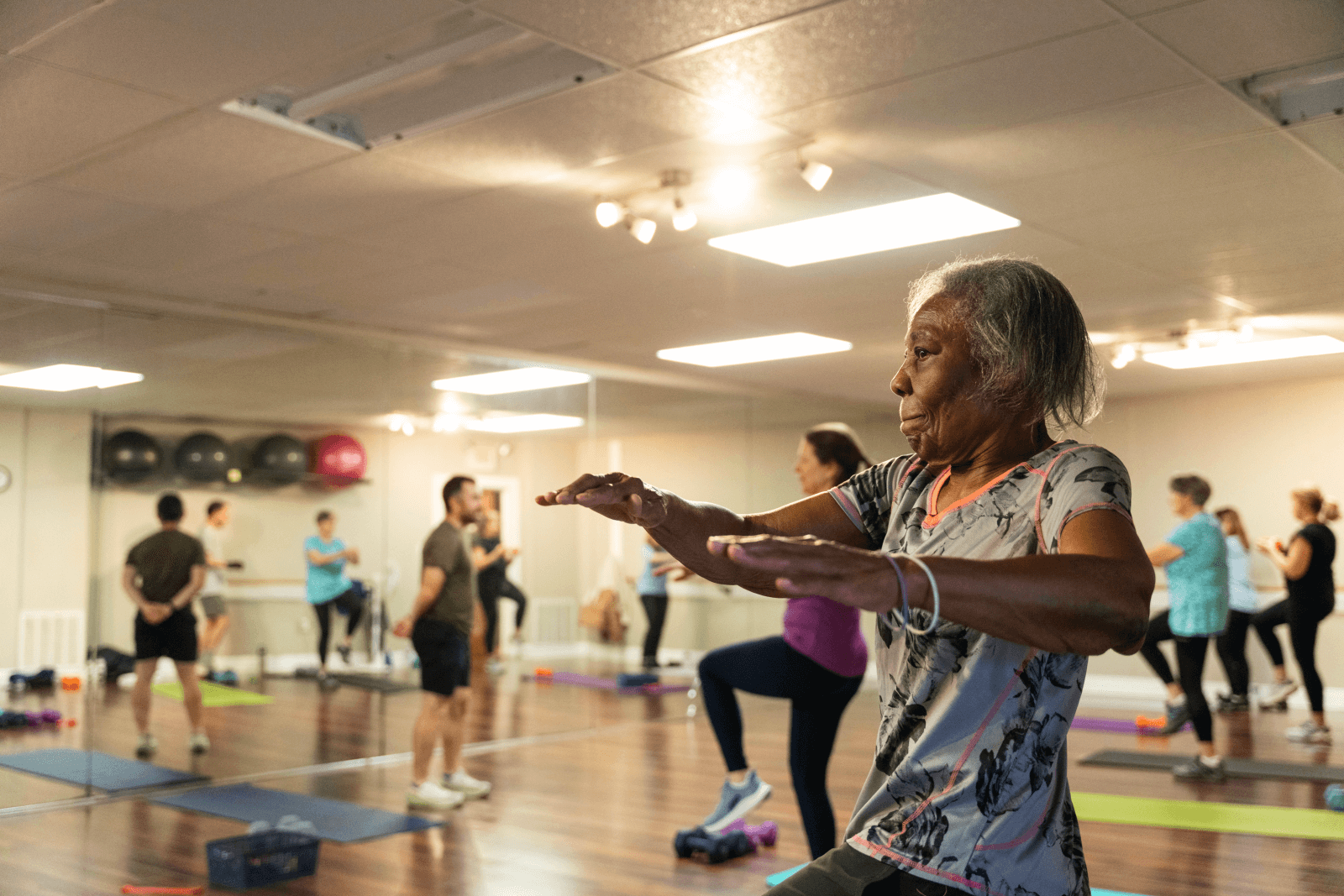
There are also fun ways to improve your balance without even realizing you're doing it. Dancing, Tai Chi, yoga, and many other fitness classes are excellent ways to challenge your balance while enjoying yourself. You'll strengthen both your body and your mind by trying new things and stepping outside your comfort zone.
This is neuroplasticity in action: we give our brain new challenges, and it adapts and grows. Growth doesn't happen without resistance. And one of the best parts of taking classes? You're doing it with others—building community, making connections, and forming friendships.
Now that's a win-win-win!
Five Ways to Improve Your Balance at Home
All exercises should be performed near a counter, sturdy chair, or wall for safety.
1. Start with Your Feet Together
Stand with your feet together and your big toes touching. Get comfortable standing upright without losing your balance.
Once that feels easy, challenge yourself:
Turn your head side to side
Look up and down
Reach outside your base of support
Catch and toss a ball
Sing a song
Close your eyes (usually the hardest challenge!)
When you've mastered that position, progress to:
A staggered stance
Tandem stance (one foot directly in front of the other)
Single-leg standing
Work toward balancing on one foot for up to 30 seconds.
2. Balance While Brushing Your Teeth
Stand on one foot while brushing your teeth.
Start by keeping the toes of your opposite foot lightly touching the floor for support. As your balance improves, lift that foot completely off the ground.
You'll be amazed at how quickly you improve when you practice every day.
3. Clock Reaches
Imagine you're standing in the center of a clock.
Keeping your weight on one leg, tap your opposite foot to the numbers on the clock:
Reach to 1, 2, 3, 4, 5, and 6 o'clock
Then work your way back to 12
Repeat on the other leg.
This exercise challenges balance, coordination, and control.
4. Side Stepping
Side-step along your kitchen counter or hallway, keeping something nearby for support if needed.
To make it more challenging:
Move more slowly
Try grapevines (cross one foot in front and then behind)
Walk on your tiptoes
Remember: the slower you go, the harder it gets because you're spending more time balancing on one leg.
5. Walk the Tightrope
Imagine you're walking on a tightrope.
Place the heel of one foot directly in front of the toes of the other and walk forward in a straight line. Then try walking backward.
Need more of a challenge?
Slow it down
Turn your head while walking
Eventually try it with your eyes closed (only when you're safely supported)
Give It a Try!
Try incorporating these activities into your day and see how your balance improves. We'd love to hear about your progress and celebrate your success.
If you have questions for me, you know where to find me at MovementRx Studio.
Warmly,
Christine Sturgis